
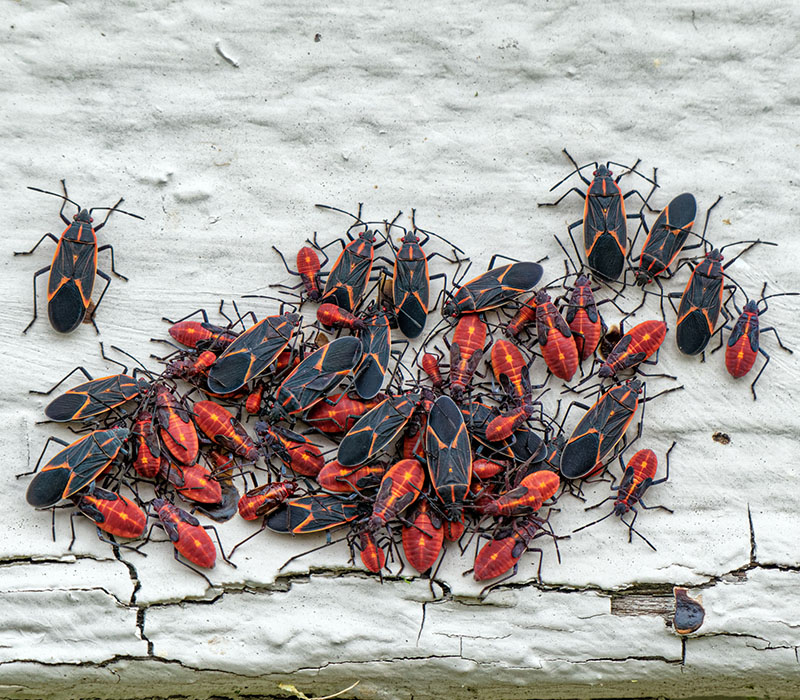
It happens every fall in Wisconsin, usually on the first warm, sunny day after a cold snap: the entire south side of your house is suddenly crawling with black-and-orange bugs. They're on the siding, the window screens, the front door — and somehow, a few dozen are already inside. Welcome to box elder bug season, one of the most reliable (and most annoying) autumn rituals in the Madison area.
Here's why it happens, why your house specifically, and what actually works to keep them out.
What Are Box Elder Bugs, Exactly?
Box elder bugs are flat, half-inch-long insects, dark charcoal-black with distinctive red-orange lines along the edges of their bodies and wings. They spend spring and summer feeding on the seeds of box elder trees (and to a lesser extent maples and ash), where you'll barely notice them. They don't bite, they don't sting, they don't breed indoors, and they don't eat anything in your house. Their crime is purely one of numbers.
Why They Swarm Your House Every October
Box elder bugs overwinter as adults, and they can't survive a Wisconsin winter exposed to the elements. So every fall, triggered by shortening days and cooling nights, they migrate from their host trees toward large, sun-warmed objects — and nothing in your yard is larger or warmer than the south- and west-facing walls of your house.
On warm October afternoons they gather on those sunny walls by the hundreds to bask. As temperatures drop toward evening, they crawl into every crack they can find: under siding laps, behind window trim, into soffit gaps, around cable penetrations. Most settle into wall voids and attics to spend the winter dormant. The ones you see inside your living room took a wrong turn and ended up on the warm side of the wall.
Why your house and not the neighbor's?
Three factors make some homes box elder magnets:
- A female box elder tree nearby. Only female trees produce the winged seeds the bugs feed on. The tree doesn't have to be in your yard — they'll fly a couple of blocks.
- Sun exposure. Homes with broad, unshaded south or west walls collect dramatically more bugs.
- Light-colored siding and lots of cracks. Warm, reflective surfaces attract them; gaps let them stay.
The Midwinter Surprise
The fall swarm is only act one. The bugs that successfully tuck into your wall voids go dormant — until a sunny January day warms the wall, or your furnace keeps the void cozy, and a few dozen wake up confused and wander into your living space. If you're seeing box elder bugs (or their look-alike companions, Asian lady beetles) indoors in the dead of winter, they've been in your walls since October. There's no new invasion happening; you're just meeting the houseguests you already had.
What Actually Works
Before they arrive (September – early October)
- Seal exterior cracks around window and door frames, utility penetrations, and where siding meets the foundation, using exterior-grade caulk.
- Repair window screens and make sure screens sit tight in their frames.
- Install door sweeps on exterior doors, including the garage service door.
- Check soffit and gable vents for torn screening.
- Schedule a fall exterior barrier treatment. A properly timed application on the sunny sides of the house, before aggregation starts, dramatically cuts the number that ever reach your cracks. This is exactly what the fall visit in our seasonal home protection programs is built around.
Once they're inside
- Vacuum, don't squish. Crushed box elder bugs release a foul odor and their body fluids leave a red-orange stain on walls, curtains, and carpet that's genuinely hard to remove. Vacuum them up and empty the canister outside.
- Skip the indoor sprays. Spraying insecticide into wall voids kills bugs where you can't retrieve them, and accumulated dead insects in voids can attract dermestid beetles — a secondary pest problem worse than the first. Interior spraying for box elder bugs is a losing move.
- Accept the winter stragglers. Once bugs are overwintering in the walls, the realistic play is vacuuming the occasional wanderer and doing exclusion right the following fall.
Should You Cut Down the Box Elder Tree?
Removing a female box elder tree on your property can reduce the population, but it's no guarantee — the bugs fly well and will happily commute from trees down the street. We generally don't recommend removing an otherwise healthy tree just for bug control. Exclusion and a well-timed fall treatment are cheaper than tree removal and more reliable.
Not sure whether you're looking at box elder bugs, Asian lady beetles, or stink bugs? All three pull the same fall stunt in Wisconsin. Our pest identification guide has photos of each, and our box elder bug service page covers treatment in more detail.
If your house turns orange-and-black every October and you're tired of the vacuum routine, request a fall exterior treatment before the swarm starts. One properly timed visit in September makes a bigger difference than anything you can buy at the hardware store.