
You wake up with itchy red welts. Again. Nobody else in the house has them, you've never seen a bug, and the internet has already convinced you it's bed bugs. Maybe it is — but in our experience inspecting hundreds of "mystery bite" homes across Madison and the Milwaukee metro, the real culprit is just as often something else, and sometimes it isn't a bug at all.
Here's a practical guide to narrowing down what's actually biting you at night in Wisconsin, based on the pattern of the bites, the season, and the evidence in your home.
Start With the Pattern, Not the Bite
Individual bites are nearly impossible to identify by appearance — dermatologists will tell you the same thing. Two people bitten by the same insect can have completely different reactions, from nothing at all to large inflamed welts. What's diagnostic is the pattern: where the bites are on your body, when they appear, who in the household gets them, and what physical evidence accompanies them.
The Usual Suspects in Wisconsin
Bed bugs
Pattern: bites on skin exposed while sleeping — arms, shoulders, neck, face, legs. Often (not always) in rows or clusters of two to three. Bites appear overnight, and reactions can be delayed by days, which muddies the timeline.
Evidence to look for: black fecal spotting on mattress seams, cast skins, live bugs in the box spring and bed frame joints. Bed bugs leave physical evidence; if you inspect thoroughly and find absolutely nothing after weeks of bites, keep an open mind about other causes. Our bed bug page covers inspection and treatment in detail.
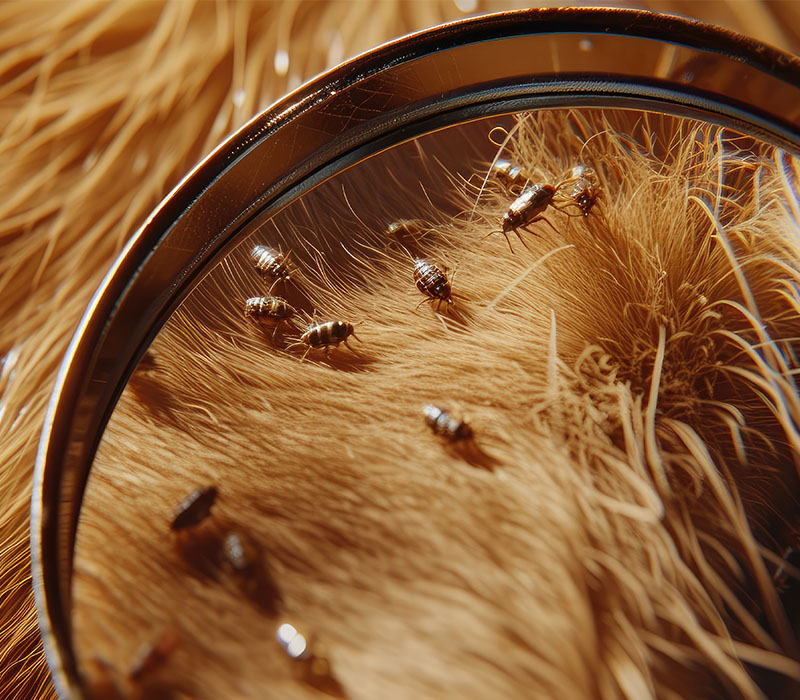
Fleas
Pattern: bites concentrated on ankles and lower legs, often three or four in a cluster, itchy immediately. Fleas bite around the clock, not just at night — but people often notice at night when they're still.
Evidence: a dog or cat that's scratching, "flea dirt" (black pepper-like specks that turn rusty red on a wet paper towel) in pet bedding, and bugs that visibly jump. Homes can also get fleas without pets — wildlife in the crawlspace or a previous owner's animals can leave a flea population behind. See our flea control service if this fits.
Mosquitoes
Pattern: classic puffy welts on exposed skin, itchy fast. In summer, a single mosquito in the bedroom produces a very convincing "mystery biter" — you hear nothing, see nothing, and wake up with three bites. Check window screens for gaps and listen for the whine.
Bird and rodent mites
The sleeper diagnosis. When a bird nest in a bathroom vent, soffit, or window AC unit is abandoned (or a mouse infestation is eliminated), the mites that fed on those animals go looking for a new host — you. Pattern: intense crawling sensations and scattered bites, often after a nest was recently active nearby. Mites are pinpoint-tiny but visible against white paper. If bites started shortly after birds fledged from a vent or after a rodent problem, mites move to the top of the list.
Spiders (probably not, honestly)
Spiders get blamed for most mystery bites and commit very few of them. Wisconsin spiders bite defensively when trapped against skin, not while foraging on sleeping people, and virtually never leave multiple bites night after night. Recurring nightly welts are almost never spiders.
When It Isn't a Bug at All
Pest professionals see this regularly, and it's worth saying plainly: recurring "bites" with zero physical evidence sometimes have non-insect causes. Common ones include:
- Dry winter skin and eczema — Wisconsin's furnace-heated indoor air is brutal from November through March, and itchy bumps from dry skin are routinely mistaken for bites.
- Contact dermatitis from new detergents, fabric softeners, or bedding.
- Fiberglass or insulation exposure after attic or renovation work.
- Medication reactions and other medical causes.
If a thorough professional inspection finds no pest evidence, a dermatologist is genuinely the right next step — not a shrug, but the correct diagnostic path.
Your Investigation Checklist
Before you call anyone, spend 30 minutes gathering evidence. It makes any inspection dramatically more useful:
- Strip the bed and inspect mattress seams, box spring, and frame joints with a flashlight.
- Note the bite pattern: which body parts, which household members, what time bites appear.
- Check pets for scratching and flea dirt, even indoor-only pets.
- Walk the exterior: bird nests in vents or soffits? Signs of mice?
- Put double-sided tape or glue traps along baseboards near the bed for a few nights and see what you catch.
- Save anything you find in a zip-top bag — even a fragment. A specimen beats a description every time.
- Compare anything you catch against our pest identification guide.
Get a Real Answer
The worst part of mystery bites isn't the itching — it's the not knowing, and the sleepless nights that come with it. A professional inspection settles the question with evidence: either we find the pest and treat it, or we rule out the pest explanations with confidence so you can pursue the right answer elsewhere. Either outcome beats another month of guessing.
If something's biting you at night anywhere in the Madison or Milwaukee area, request an inspection. Bring us your evidence, your bite pattern, and your timeline — we'll help you get to the bottom of it.