
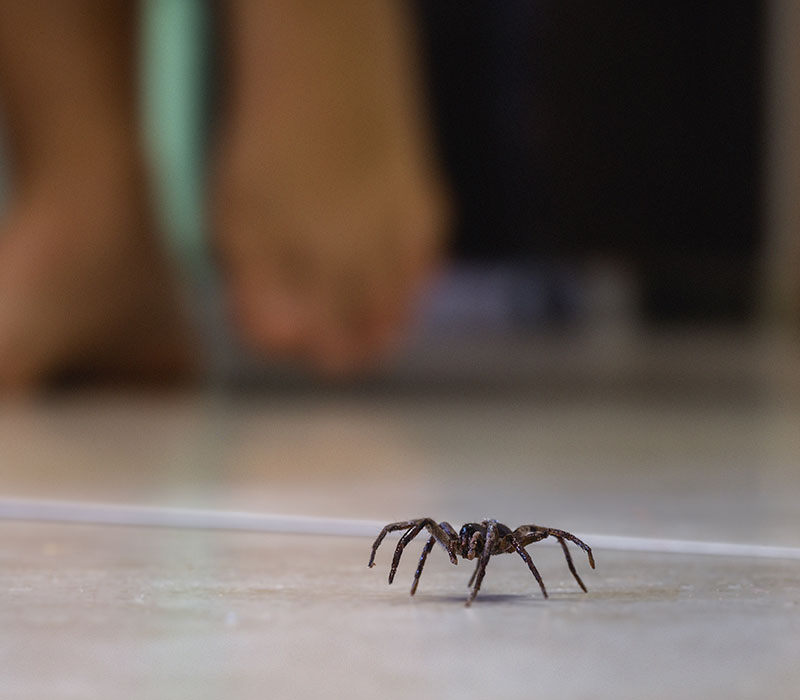
If you live near water in Wisconsin, you already know the pattern. The porch light, the lakeside windows, the boathouse, the underside of the deck — by late August they are draped in webs, and you can knock them all down on Saturday and be right back where you started by Tuesday.
It happens on Lake Monona and Lake Waubesa the same way it happens on the Lake Michigan shore in Racine and Kenosha, and along the Root, Fox and Yahara rivers in between. Here is what is actually going on, and which parts of it you can change.
The Spiders Are Following the Bugs
Spiders do not care about your siding. They care about where the food is, and near water the food is overwhelming. Midges, mayflies and caddisflies hatch off the water in enormous numbers through summer, and the ones that hatch at night navigate toward the brightest thing available — which, on a dark shoreline, is your house.
That is the whole mechanism. Your porch light and lakeside windows pull thousands of aquatic insects into a small area every night, and orb weavers and cellar spiders set up exactly where the density is highest. A heavy web population on a lake home is not a sign of a dirty house. It is a sign of an excellent hunting spot.
This is also why the problem peaks in late summer and early fall rather than spring. The spiders that hatched in May have spent the season eating well and are now at full adult size, building their largest webs and laying egg sacs before frost. They look alarming in September because they finally are big — not because more of them arrived.
Which Ones Are Actually Worth Worrying About
Very few. Wisconsin has no established brown recluse population, and while northern black widows exist in the state they are genuinely rare, shy, and found in undisturbed places like woodpiles and unused sheds rather than in living space. In more than a decade of shoreline work, the overwhelming majority of what we are called about is:
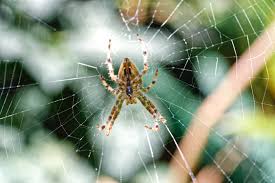
- Orb weavers — the big showy ones rebuilding a wheel-shaped web across your doorway every night. Harmless, and the single most common lakefront complaint.
- Cellar spiders — long, spindly legs, messy tangled webs in basements, boathouses and garage corners. Harmless.
- Fishing and grass spiders — large, fast, and startling when they run across a deck board. Not dangerous.
- Yellow sac spiders — small, pale, and the one most likely to actually bite, usually when trapped against skin in bedding or clothing. The bite is painful but medically minor.
The honest summary: on a Wisconsin lake home, spiders are a volume and appearance problem, not a safety one. That is worth knowing before anyone pays for an emergency treatment.
What Actually Reduces Them
Knocking down webs accomplishes nothing on its own — you are removing the web, not the spider or the food supply, and it is rebuilt overnight. The things that measurably work, in order of impact:
- Change your exterior lighting. This is the highest-leverage fix by a wide margin. Swap white and blue-white exterior bulbs for warm amber or true bug lights, which draw a fraction of the aquatic insects. Better still, move the light source away from the door and windows — a pole light twenty feet out pulls the whole insect cloud away from the house with it. Put decorative and landscape lighting on timers or motion sensors so it is not burning all night in peak hatch season.
- Treat the harborage, not the webs. A residual exterior application to eaves, soffits, window frames, deck undersides, railings and the foundation line targets where spiders rest and travel. This is what keeps webs from reappearing in the same six spots every week.
- Cut the moisture and clutter at the perimeter. Move firewood, boat cushions, stacked pots and lumber off the wall and up off the ground. Trim vegetation back from siding so it is not a bridge.
- Seal what lets them inside. Door sweeps, window screens, and gaps around dryer vents, hose bibs and utility penetrations. Most indoor spiders in a lake home walked in through a gap you can close in an afternoon.
- Time it right. Treatment applied in July and again in late August carries you through the worst of it. Waiting until the webs are everywhere in late September means treating at the tail end of the season.
Same Problem, Both Sides of the State
The lakefront version of this gets attention, but the mechanism is identical anywhere the insect pressure is high: river corridors, wooded lots, homes backing onto wetlands or retention ponds, and any house with a bright light and a dark yard behind it.
We run this work across the entire service area at the same pricing — the Madison lakes in Monona, McFarland and Madison itself, and the Lake Michigan shoreline and river corridors through Oak Creek, Racine, Kenosha, Caledonia, Muskego and Waukesha. No travel fee anywhere on that list.
If you are heading into another fall of clearing webs off the same railing every weekend, the fix is lighting plus a properly timed exterior treatment — not more sweeping. See our spider control page for how we approach it, or request a free estimate and we will look at your lighting and harborage together.